
That oral GLP-1 ad got Novo in hot water
plus, a reminder that ur fave LLM isn't HIPAA compliant!
Hi, hello. I drafted this on Blizzard Sunday, then updated it with more pharma + policy news from this week yesterday, so it’s a bit long! You may need to click out to read the full thing. Thanks for reading.
Newsletter highlights include: new Lykke Li, Balanchine-era NYCB, an illuminating piece on what the heck is going on in SF to discuss over a tiny tini this weekend, and my qualms with using LLMs as your doctor. I also share a scene report from the “conservative Cosmo” NYFW event. This is what I wore:

If you’re here for the drug-dealing takes: Novo is on the FDA’s naughty list, the US government is limiting access to care in Minnesota, and our new pricing policies have EU governments scrambling.
WHAT I’M INTO
Press Play: “Lucky Again” by Lykke Li
This song feels like a nostalgic track for a spring stroll, even though it’s new and there’s a blizzard outside. Perhaps it’s her mixing disco with Vivaldi. Or the relatability of wanting to strike luck over and over and over again. Welcome back, Lykke. We’ve missed you.
Build Literacy: Winter Season by Toni Bentley
I sort my “Books To Read” list by seasons. Some titles are snowy and blustery; others demand longer days and sandy bare feet. Because Winter Season is an intimate look at Toni Bentley’s inner life as she prepares for NYCB’s 1980 Winter Season, I’d categorized it under Winter (duh). My only regret is waiting until January to read it, because it would have been fun to start it around the time I saw George Balanchine’s The Nutcracker® last year. Through her journal-style writing, she lets us peer into her world in a Degas-like manner. It’s fascinating that George Balanchine was a God to early NYCB dancers. I’d wager that devotion hasn’t cooled in NYCB generations since. What I loved most, though, was how she frames ballet dancers as performers twice over: once for the house, and once for the audience living inside their own heads. Bentley balances the beauty and joy of her highs with a dash of the unglamorous ballet lows—eating disorders, identity crises, and low pay. Her musings range from what money is good for (to buy a fur coat and ballet clothes), feeling exposed (what you eat shows, how you slept shows, your love and care show…and how we love it, that exposure), and the perfect GRWM cocktail (coke and coffee, cigarettes, and rock and roll on the radio at three hundred decibels).
Let me curate ur news: “Child’s Play” by Sam Kriss (Harper’s Magazine)
“Child’s Play” is to the agentic Gen Z SF world as Winter Season is to the secret lives of NYCB ballerinas. This was a curious and endearing look at the boys who are trying to make things happen before AI permanently blocks social mobility, leaving some of us in the “permanent underclass.” I’m most impressed by the Sperm Race guy and have tracked his work since we interviewed The Sperm King last year. I felt compassion for Roy and want him to hang out with his friends forevermore. But donald boat and his antics were the most charming to me, particularly his perfect read of Silicon Valley Broligarchs: “They have too much money and nothing going on. They have no swag, no smoke, no motion, no hoes. That’s all you need to know.”
PULSE CHECK!
“Pulse Check” is your quick hit of what’s going on in healthcare + pharma, complementing the longer, more in-depth “On Health” letters.
Trump is pausing Medicaid payments to Minnesota under the premise of improper payment and fraud, but realheads know that’s smoke and mirrors.
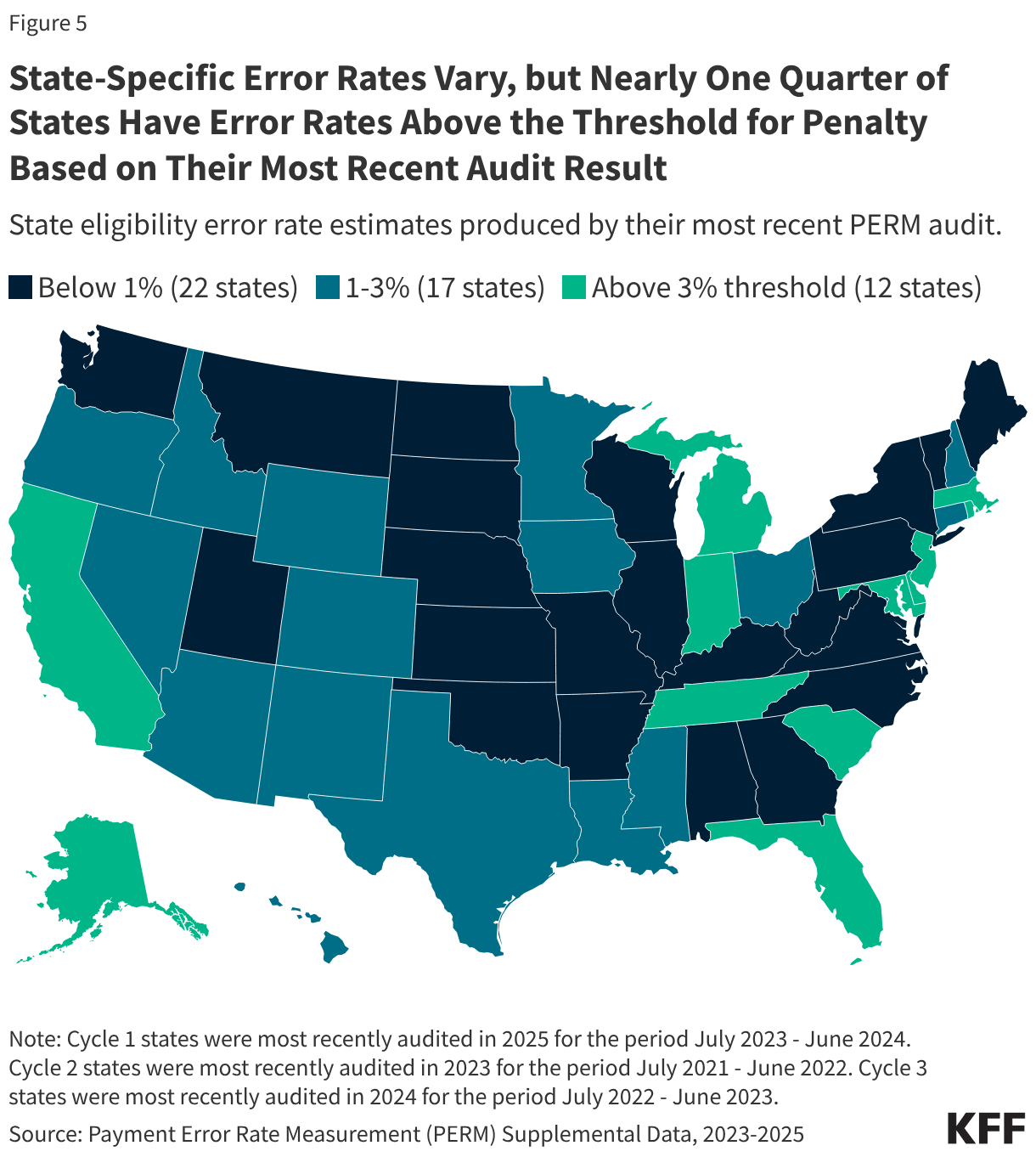
KFF showed most improper payments come from documentation and human error (not fraud!)
But let’s play ball! If we accepted the premise that payment errors were All Fraud All The Time, Minnesota's error rate of 1.5% falls below the national average of 5%. So why are we targeting Minnesota when other states like South Carolina (8.7%) and Alaska (9.5%) have higher error numbers? I’m not saying we should halt payment for those states either, but Vance warned California might be next…
Get ready for more MFN deals.
2025 closed many Big Pharma MFN deals, but 2026 will be the year for small and mid-sized pharma to get on Trump’s good side.
Big Pharma can ride the MFN wave—they generally have more assets, a deeper pipeline, and fully control their launch strategies.
Smaller companies don’t have that luxury. They also often partner with international companies for licensing deals, and those partners DGAF about US pricing. I don’t know which smaller pharma companies will take the voluntary deal bait, but I’m sure it will happen.
Last year, I questioned the possibility that MFN would reduce US drug prices—citing confidential NET prices and potential Europe drug launch delays. [Please note this previously had a typo and I said “list” prices when I meant “net!”] We’re starting to see this play out:
50+ conservative US organizations petitioned against codifying Trump’s MFN policy
A hot new bombshell has entered the villa: 10 US biotechs launched the Midsized Biotech Alliance of America, a coalition to ensure MFN doesn’t decimate US biotech innovation
The European Federation of Pharmaceutical Industries and Associations (EFPIA) published a call to action for Europe to up its game and incentivize biopharma innovation or risk trailing behind US and China ~4ever~.
We also have a new Danish government task force keeping an eye on US pricing policy and monitoring MFN threats to the Danish pharma sector
My former CEO doesn’t think MFN/tariffs will affect Novartis business in the near-term, but flagged they may delay future launches ex US.
Amgen withdrew Repatha (a PCSK9 inhibitor) from the Danish market likely due to MFN concerns. Repatha is one of Amgen’s primary growth assets, they’re likely trying to protect this revenue. Pharma will protect their US revenue.
Did you think this year’s Super Bowl ads on crypto, AI, gambling, and weight-loss were scaring the hoes? The FDA probably did!
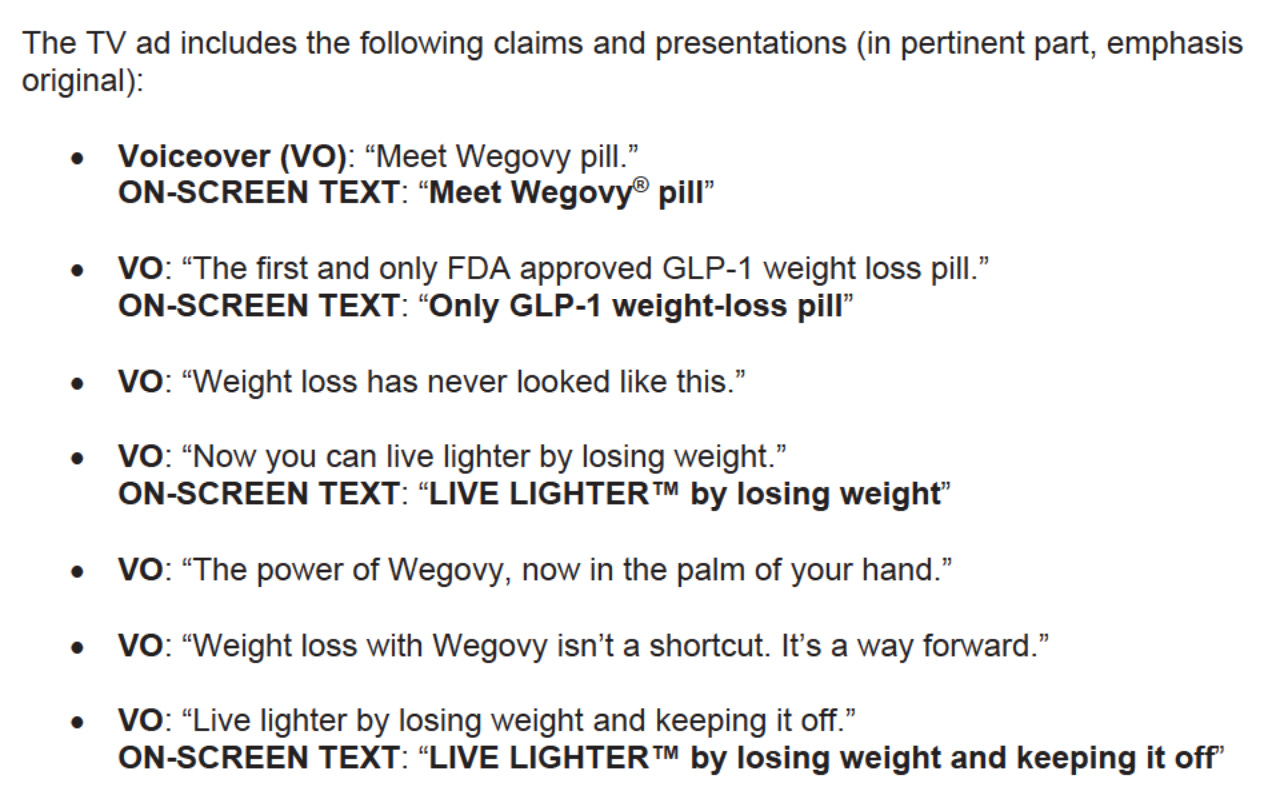
The FDA said Novo’s “Live Lighter” ad (premiered during this year’s Golden Globes) was misleading in an untitled letter dated February 5th. They flagged statements like “weight loss has never looked like this” and allusions to mental/emotional benefits beyond weight-loss imply the pill form is better than other GLP-1 formulations and can solve other life challenges, when they don’t have the data to back this up. My guess is Novo’s FDA submission package also doesn’t include evidence that the Wegovy pill can help you parallel park and rescue kittens.
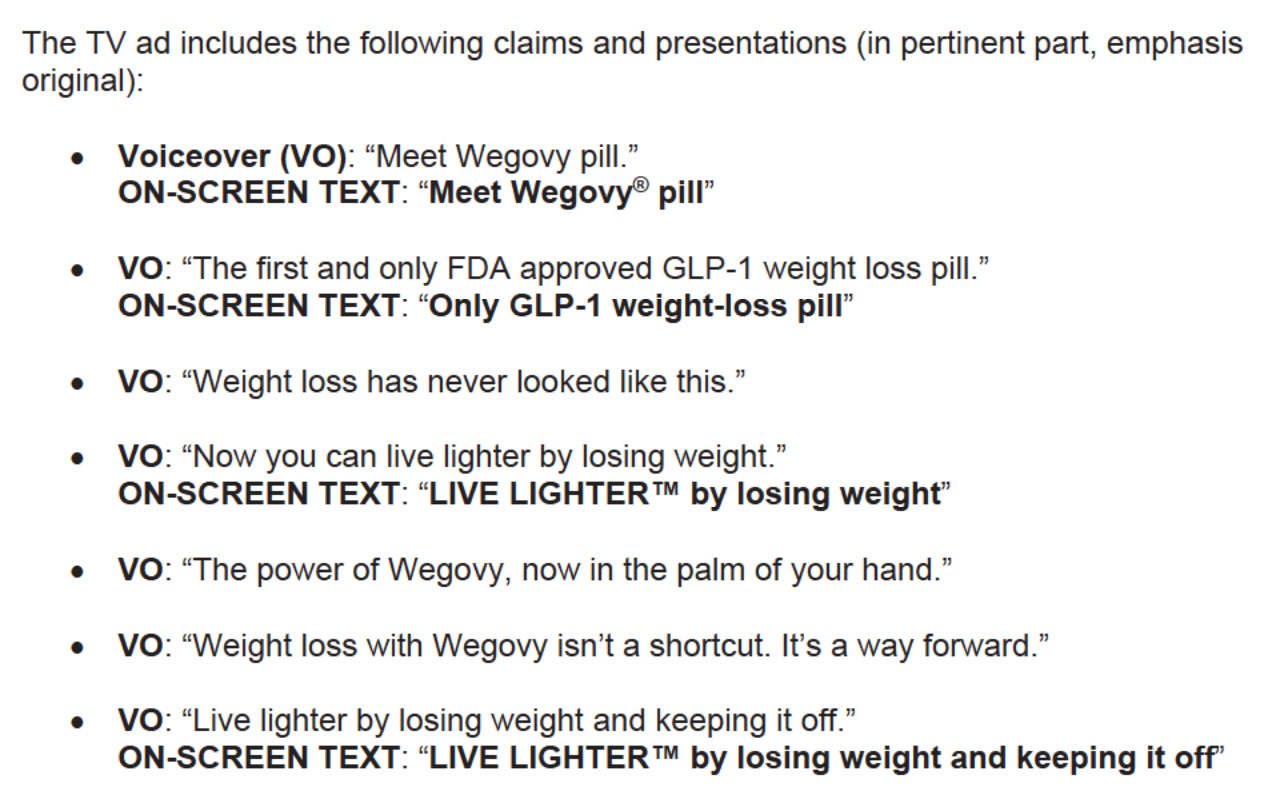
Screenshot from the Feb 5th FDA untitled letter
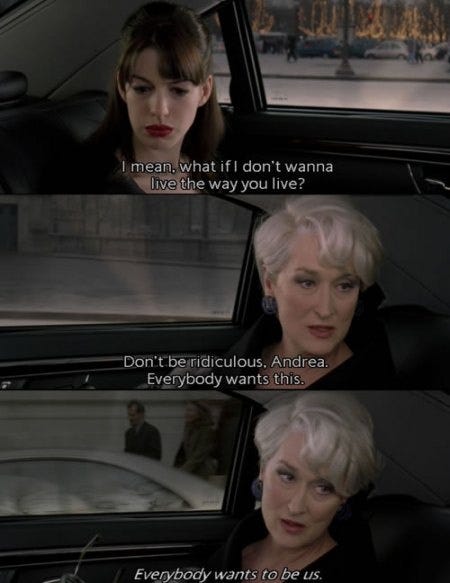
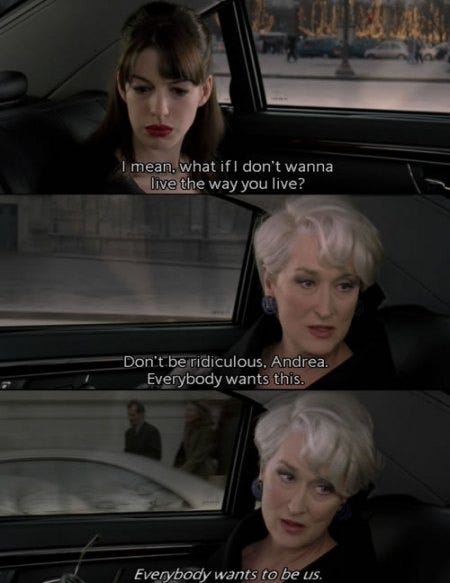
Neither ChatGPT nor Claude is HIPAA compliant, yet 40 million people a day ask ChatGPT healthcare questions and volunteer their own health data. A 2024 KFF survey found one in six people use LLMs for health. Why? Our healthcare system is complex, expenive, and inaccessible to some, particularly to those in rural hospital deserts (30+ minutes from the nearest hospital). Earlier this year, OpenAI published a healthcare report on how Americans use ChatGPT and introduced ChatGPT Health—making it clear they’re using your healthcare questions to train their models. Anthropic followed one week later, unveiling Claude for Healthcare and yassifying Claude for Life Sciences. Everybody wants this (a piece of the healthcare pie).
Elon Musk keeps asking Twitter users to upload their precious medical data to Grok, but Grok is like, ”Please…do not do that.”
AI and digital tools can help address some healthcare access gaps, with the right guardrails and privacy protections for patients. But the current state of AI healthcare apps is ripe for data breaches IMO, since they’re not subject to the same rigorous regulatory/legal oversight hospitals and clinics must follow to protect our personal data.
I’m all for reducing information asymmetry in healthcare. But don’t use a blackbox LLM as your doctor. Please don’t upload your medical data to basic consumer-facing LLMs. Or do! But recognize the risks. The internet is forever, and so is that LLM input. You’re your own person, and I value your agency. Maybe use it as a TA? Ask probing questions! But even former intelligence officers are telling us to avoid it.
 Travis Akers 🇺🇸@travisakersNobody, and I repeat, absolutely nobody should ever upload their medical information into an AI platform. I am telling you this as a former intelligence officer.
 9:42 PM · Feb 17, 2026 · 3.72M Views3.3K Replies · 26.5K Reposts · 112K Likes
I am hopeful about Claude for Life Sciences, as drug discovery is one of the AI use cases that excites me most. Sanofi and Novo Nordisk are already using Claude for Life Sciences to support admin tasks. Anthropic has now linked to Owkin (shoutout Thomas!), ClinicalTrials.gov, and an arsenal of tools to support R&D. This may help smaller biotechs, who may lack the right strategic capabilities in regulatory, commercial, and market access, optimize clinical trial design. I’m cautiously optimistic that this could help lower the barrier to entry and the eye-watering cost of drug R&D.
Claude’s premium tier subscription (i.e., not the free version) allows US Pro and Max subscribers to sync medical records from ecosystems like Function Health, Apple, and Android without archiving this sensitive information in Claude’s memory banks or funneling it into model training pipelines. We’ll see how that holds!
But I do hope they’re training these models to ask the right follow-up questions rather than relying on genpop to know what’s relevant/key/differentiating for diagnosis—a key skill doctors learn in medical school/training.
What’s the policy play? There’s always one. OpenAI used its “AI as a Healthcare Ally” report to lobby for:
Breaking down silos and strengthening the healthcare system by linking patient genomics, medical imaging, and other Real World Evidence
Enabling infrastructure for AI-assisted drug discovery
Building a clearer AI medical device FDA regulatory pathway to expedite AI device access across disease areas (current FDA medical device approval requires assessment by disease area)
Updating FDA guidance to allow physicians to use AI medical devices in their practice


WHAT I’M UP TO
NYFW has felt progressively uncool to me for a few years, but I went to the “Conservative Cosmo” women’s magazine event anyway.
